Thursday, January 29, 2026

Books Read in 2025: Four-Star Children's, YA, Graphic, and Short Stories. And WTF 15E?

 So Suzanne made me cry a little with her comment on yesterday's post (now two days ago, hoping it won't turn into three) (update: it has turned into three). I really look forward to doing these posts - not because I think people are clamouring for them (other than a couple of my IRL friends who do, actually, clamour for them and it's adorable), but because I am always so scattered and struggling in January and it's an easy way to keep myself blogging. It soothes my nervous system to count and organize the books and assemble the posts (other than the times when I'm swearing at myself for not having taken adequate notes for a book that I now can remember VERY LITTLE about). 

If Suzanne was anyone else I might suspect that "let alone say something meaningful in as few words as you manage" was a dig, but I DO know Suzanne, and even though I admire and am slightly envious of the lengthy, well-thought-out, detailed reviews she posts on her book blog, I believe she also doesn't judge me for the fact that my reviews are often shorter than the book synopsis. I have tried to write longer reviews, but my inclination is always to just get down how I felt about the book, and anything longer starts to feel like a grade-school book report. Oh hey, I have a new goal for this year - attempt some longer book reviews and try to figure out why they feel difficult. 

We stayed at the Westin St. Francis, which is an old hotel with a lot of character and was really fun to walk around. 

We flew from Ottawa to Washington on Monday, and then got on our flight from Washington to San Francisco. Everything was going great. I was reading a nine-hundred-page book, so I was happy to have a long stretch of reading time. I am always ridiculously amused and delighted by the warm nuts.


I think the flight from Washington to San Francisco was supposed to be about five and a half hours. At about two and a half hours we heard a garbled announcement by the pilot that said something about landing. We were confused and flagged down a flight attendant. She looked uncomfortable and said there might be a security issue in the back and we might have to divert to offload a passenger, but usually when that happens they just take him off and continue on.

That was not what happened.

We landed, there were cops, there was talking, there was loitering, there was some laughing (not cool guys, read the room). There was a lot of nothing. Then this guy in his early twenties with kind of a smirk on his face was led off the plane by a flight attendant who was speaking quite nicely to him. Then we were told we had to get off the plane for it to be searched thoroughly. Then the nightmare began.

We were at O'Hare airport in Chicago. They turn off the heat at night because there are no flights, so it was cold. They brought out a bunch of kleenex-thickness blankets and gave us water and weird American snacks. 


The new departure time kept being pushed later and later. I didn't even really know what time it was or how long we had been there, between Ottawa time, San Francisco time (three hours behind Ottawa) and Chicago Time (one hour behind Ottawa, which I didn't find out until much later). I felt like we had always lived in Chicago O'Hare. There was a periodic announcement where some dude kept calling it the "Greatest Airport in the World!" sounding like a deranged Disney ride guide. 

One girl had squirreled her way into the space between a garbage can and a large pillar. She was lounging on her luggage with her phone propped on her stomach. My mother would have been horrified. I thought it was the most brilliant thing I had ever scene. Some people laid down on the floor and slept. I read for a while and then I took my toiletry bag to the bathroom, took out my contacts and washed my face, wet my toothbrush and sucked what little toothpaste residue out of it I could, and then just sat with my eyes closed for a bit. 

Some unknown time later (about five hours, Matt says) we got back on the plane. We had four and a half hours to go. Matt immediately went to sleep. I had circled all the way through exhaustion to wide awake-ness. I watched The Long Walk. I thought it was really good but it was three a.m. so who the hell knows. I watched some of the 12 Monkeys tv show I didn't even know existed (loved the movie). I watched some of the new I Know What You Did Last Summer which was terrible, and then I got a couple hours of sleep.

We took an Uber the forty minutes to the hotel. It was 6:30 a.m. and he was playing loud electronic music. I nearly said "I've been mostly awake for 24 hours, DO YOU MIND" but I couldn't figure out how to say anything without sounding like a total bitch, so I gritted my teeth and endured. I took a quick shower and laid down. Matt was refreshed enough from his plane sleep that he did a couple of calls and headed to the trade show. I slept hard for four hours and then felt pretty good so decided to go out for a wander.

Later in the day Matt found this on Twitter:


FFS, if I had known that I would have stuck my foot out and tripped him on his way out. And maybe tried to shake out some residual cocaine for my troubles. 


Children's

Wundersmith: The Calling of Morrigan Crow (Nevermoor #2) by Jessica Townsend: Synopsis from Goodreads: Wunder is gathering in Nevermoor ...

Morrigan Crow may have defeated her deadly curse, passed the dangerous trials and joined the mystical Wundrous Society, but her journey into Nevermoor and all its secrets has only just begun. And she is fast learning that not all magic is used for good.

Morrigan Crow has been invited to join the prestigious Wundrous Society, a place that promised her friendship, protection and belonging for life. She's hoping for an education full of wunder, imagination and discovery - but all the Society want to teach her is how evil Wundersmiths are. And someone is blackmailing Morrigan's unit, turning her last few loyal friends against her. Has Morrigan escaped from being the cursed child of Wintersea only to become the most hated figure in Nevermoor?

Worst of all, people have started to go missing. The fantastical city of Nevermoor, once a place of magic and safety, is now riddled with fear and suspicion...

I love this series. It has all the requisite elements - imagination, wonder, a well-constructed fantasy world with wonderful characters, a plucky hitherto-mistreated child with an unsuspected power, and lurking danger. The author is Australian, which tracks, because I feel like Australian fiction has been increasingly available over here in the past few years, and I have taken to much of it with a passion. I have this in most of my libraries at this point, and am looking forward to giving it to my niece in a few years, along with The Colours of Madeleine trilogy. 

YA

Dead Girls Don't Dream by Nino Cipri: Synopsis from Goodreads: Everyone who wanders from the path in Voynich Woods is never seen again. The neighboring town, in decline after the demise of a once-thriving logging industry, is now known for its mysterious folklore and missing posters, because no one who gets lost comes back to tell the tale.

Except for Riley Walcott.

Riley knows better than to stray from the trail in the woods behind her uncle Toby's house. But her little sister Sam breaks the rules in pursuit of a local legend, so Riley chases after her and discovers a masked, knife-wielding figure and a waiting grave.

Madelyn lives deep in the forest. Subject to her mother's strict rules, she's forbidden from leaving home or using her magic--but one night, she risks everything to help a stranger who's lost in the woods.

When Riley is murdered in a strange ritual, Madelyn uses her magic to resurrect her, and their lives are immediately entwined in the gnarled history of Voynich Woods. Riley, who feels trapped in her small town but too afraid to leave, was never a believer, but now the evidence is taking root under her skin. Madelyn has the scars to prove how terrible magic can be, and longs for a life beyond her mother's grasp. Together, with the ghost of long-dead Jane, they're forced to uncover the truth about Voynich Woods and the legends within.

At once tender, violent, and thrilling, Dead Girls Don't Dream is a novel of recovery, healing, and finding your power.

-”’I’ll kill you if you incorporate me into your ghost tour,’ she warned Toby.

Toby shrugged and said, ‘You sure? We can probably charge double for a tour with an actually undead guide.’

They stared at each other, stone-faced, until Riley’s lips quivered and cracked into a smile, and they both broke into laughter.

Madleyn’s confusion and concern was all over her face, and Riley shrugged apologetically to her. “Sorry, in this family we turn horrible trauma into stupid jokes.’”

This was excellent. There is the always-tempting cursed woods trope, and yet this still felt fresh and new, which is quite an accomplishment. It addresses the opioid crisis in small-town America but incorporates it almost seamlessly into the story. There are two extremely fraught mother-daughter relationships, with very different causes and results. There are different ways of being trapped and feeling beholden to family members. The energy between Riley and Madelyn is sweet and strong, and the body horror (which I go back and forth on in general) serves the story well - just look at that cover! I also come from a family that deals with grief and trauma through bad jokes, so that was very relatable. 

Lovely Dark and Deep by Elisa A. Bonnin: Synopsis from Goodreads: From author Elisa A. Bonnin comes Lovely Dark and Deep, a YA dark academia novel exploring magic, loneliness, and the power of found family. Hidden off the coast of Washington, veiled in mist, there is an island that does not appear on any map. And on that island is Ellery West.

Ellery West has always been home for Faith. After an international move and a childhood spent adjusting to a new culture and a new language, the acclaimed school for magic feels like the only place she can be herself. That is, until Faith and another student walk into the forest, and only Faith walks out.

Marked with the red stripe across her uniform that designates all students deemed too dangerous to attend regular classes, Faith becomes a social pariah, an exile of Ellery West. But all she has to do is keep her head down for one more year to graduate, and she gets to keep her magic. Because when students fail out of Ellery West, they have their magic taken away. Forever. And Faith can't let that happen.

Except terrifying things are still happening to students, and the dark magic that was unleashed in the forest still seems to be at work. To stop it, Faith and the other Red Stripes will have to work together, risking expulsion from the magical world altogether.

Yes, yes there IS another possibly-enchanted, perilous forest in this book, AND a mysterious island. This was dark academia that hit perfectly. I loved seeing Faith bond with the other outcasts and regain her confidence and stability. The magic community she is so terrified of losing can be read as any number of communities, and the Red Stripe students are a wonderful found family example. 

How to Find a Missing Girl by Victoria Wlosok: Synopsis from Goodreads: For fans of A Good Girl's Guide to Murder and Veronica Mars, this whip-smart thriller follows a sapphic detective agency as they seek the truth behind a growing trail of missing girls in small-town Louisiana. 

A year ago, beloved cheerleader Stella Blackthorn vanished without a trace. Devastated, her younger sister, Iris, launched her own investigation, but all she managed to do was scare off the police’s only lead and earn a stern warning: Once she turns eighteen, more meddling means prison-level consequences.
 
Then, a year later, the unthinkable happens. Iris’s ex-girlfriend, Heather, goes missing, too—just after dropping the polarizing last episode of her true crime podcast all about Iris’s sister. This time, nothing will stop Iris and her amateur sleuthing agency from solving these disappearances.
 
But with a suspicious detective watching her every move, an enemy-turned-friend-turned-maybe-more to contend with, and only thirty days until she turns eighteen, it’s a race against the clock for Iris to solve the most dangerous case of her life.

In the inevitable comparisons to A Good Girl's Guide to Murder, I would have to confess that this comes up a tiny bit short, but I still really liked it. It reads as a much more realistic portrayal than usual of an adolescent investigator - Iris doesn't just fall into it, she is methodical and intelligent, but also often runs afoul of the police and does face actual consequences - it's not quite as good as Two Can Keep a Secret by Karen McManus where the boyfriend actually thinks "wow, she is really bad at solving crimes", but still appreciated. Really great casual Sapphic representation too, and realistic close friendships. I haven't read a lot of books set in Louisiana, and the small town setting was also effective (plus, no forest!)

A Place for Vanishing by Ann Fraistat: Synopsis from Goodreads: A teen girl and her family return to her mother's childhood home, only to discover that the house's strange beauty may disguise a sinister past, in this contemporary gothic horror from the author of What We Harvest.
The house was supposed to be a fresh start. That's what Libby's mom said. And after Libby’s recent bipolar III diagnosis and the tragedy that preceded it, Libby knows she and her family need to find a new normal.

But Libby’s new home turns out to be anything but normal. Scores of bugs haunt its winding halls, towering stained-glass windows feature strange, insectile designs, and the garden teems with impossibly blue roses. And then there are the rumors. The locals, including the mysterious boy next door, tell stories about disappearances tied to the house, stretching back over a century to its first owners. Owners who supposedly hosted legendary masked séances on its grounds.


Libby’s mom refuses to hear anything that could derail their family’s perfect new beginning, but Libby knows better. The house is keeping secrets from her, and something tells her that the key to unlocking them lies in the eerie, bug-shaped masks hidden throughout the property.

We all wear masks—to hide our imperfections, to make us stronger and braver. But if Libby keeps hers on for too long, she might just lose herself—and everyone she loves.

-”Outside, white brick. Inside, clean green carpet and orderly metal bookshelves. Unlike our house, all the angles here made sense – crisp lines meetings corners just where they should.

And yet, somehow, the longer I looked, the more all the library’s right angles felt wrong. So tidy they almost made me nauseous.

My family was changing the house, peeling back its dusty exoskeleton one plank of plywood at a time – but what if the house was changing us, too? Recasting our sense of normal in its own warped mold. If I ever managed to feel more at home there, would I only feel more out of place everywhere else?”

The early part of this was kind of torture to read, not because it wasn't well written but because it was. It was impossible for me not to over-identify with Libby, and the way she had to hide her understandable feelings and reactions to what was happening because of the threat of not being believed and being sent away was excruciating. One of the most terrifying plot devices to me has always been having loved ones corrupted or taken over to the point that they are dangerous and unrecognizable. So the first two-thirds of this were bang on. Once all the story elements were locked into place and the last act started, I relaxed a little, but also felt that the last part could have used some tightening. Action of this sort is always better under-written than over, in my opinion, and it dragged a bit. I still found this a solid entry, with good characterization and some tropes and devices I haven't seen before. 

Come Out Come Out by Natalie C. Parker: Synopsis from Goodreads: It's never been safe for Fern, Jaq, or Mallory to come out to their families. As kids their emerging identities drove them into friendship but also forced them into the woods to hide in an old, abandoned house when they needed safety. But one night when the girls sought refuge, Mallory never made it back home. Fern and Jaq did, but neither survivor remembered what happened or the secrets they were so desperate to keep.

Five years later, Fern and Jaq are seniors on the verge of graduation, seemingly happy in their straight, cisgender lives—until a spirit who looks like Mallory begins to appear, seeking revenge for her death, and the part Fern and Jaq played in it. As they’re haunted, something begins to shift inside them.

They remember who they are.
Who they want to love.
And the truth about the vicious secrets hiding in their woods.

This delightfully dark and pointed novel calls out the systems that erase gay and queer and trans identity, giving space to embrace queerness and to unleash the power of friendship and found family against the real monsters in the world.

-”’Again, Kaitlyn smiled, the insult sliding off her as easily as rain. ‘Tell me, then. Say that you don’t like me even a little bit. If you can say it, I’ll jump off that ledge and leave you here to hate me in peace.’

Fern opened her mouth to give Kaitlyn exactly what she’d asked for, but there were no words ready. It took her only a second to realize that she couldn’t say it because she didn’t want Kaitlyn to leave.

‘Did you just bully me into friendship?’ Fern asked

Katilyn’s laugh was warm and husky. ‘Maybe I did.’”


I absolutely loved Beware the Wild by Natalie C. Parker, and to be honest nothing since has quite measured up. I loved this concept, though, and the execution was great. There is a gender-swapped Romeo and Juliet that begins to spark memories in one of the girls that is brilliant as a concept, and the contrast between the queer people who feel forced to hide and the ones that are comfortable with their sexuality is beautifully depicted. I will continue to follow Natalie C. Parker every time she leads me into the woods. 

So Witches We Became by Jill Baguchinsky: Synopsis from Goodreads: If boys will be boys, girls will fight back.

For high school senior Nell and her friends, a vacation house on a private Florida island sounds like the makings of a dream spring break. But Nell brings secrets with her—secrets that fuse with the island's tragic history, trapping them all with a curse that surrounds the island in a toxic, vengeful mist and the surrounding waters with an unseen, devouring beast.

Getting out alive means risking her friendships, her sanity, and even her own life. In order to save herself and her friends, Nell will have to face memories she'd rather leave behind, reveal the horrific truth behind the encounter that changed her life one year ago, and face the shadow that's haunted her since childhood.


Easier said than done.


But when Nell's friends reveal that they each brought secrets of their own, a solution even more dangerous than the curse begins to take shape.

Perfect for fans of Courtney Summers and Rory Power and reading like a YA feminist spin on Stephen King’s The Mist, So Witches We Became is a diverse, queer horror about female friendship, the emotional aftermath of surviving assault, and how to find power in the shadows of your past

3.5 stars. This could be a tiny bit heavy-handed at times, but I give grace for female rage and friendships and queer horror because I want to see more of it. 

Dead Things Are Closer Than They Appear by Robin Wasley: Synopsis from Goodreads: A painfully average teen’s life is upended by a magical apocalypse.
High school is hard enough to survive without an apocalypse to navigate.

Sid Spencer has always been the most normal girl in her abnormal hometown, a tourist trap built over one of the fault lines that seal magic away from the world. Meanwhile, all Sid has to deal with is hair-ruining humidity, painful awkwardness, being one of four Asians in town, and her friends dumping her when they start dating each other—just days after one of the most humiliating romantic rejections faced by anyone, ever, in all of history.

Then someone kills one of the Guardians who protect the seal. The earth rips open and unleashes the magic trapped inside. Monsters crawl from the ground, no one can enter or leave, and the man behind it all is roaming the streets with a gang of violent vigilantes. Suddenly, Sid’s life becomes a lot less ordinary. When she finds out her missing brother is involved, she joins the remaining Guardians, desperate to find him and close the fault line for good.

Fighting through hordes of living corpses and uncontrollable growths of forest, Sid and a ragtag crew of would-be heroes are the only thing standing between their town and the end of the world as they know it. Between magic, murderers, and burgeoning crushes, Sid must survive being a perfectly normal girl caught in a perfectly abnormal apocalypse. 
Only—how can someone so ordinary make it in such an extraordinary world?

-”Whatever, I’m not a morning person, which means I become competent at life an hour before bedtime. Some people jump out of bed, eager to face the day. Some people wake up and sob, ‘I wish I knew how to quit you’ into their pillows. My ex-best friend Nell once said ‘If you aren’t getting quality sleep, how can you be your best self?’ Maybe I don’t have a best self. Maybe I have one self with no qualifier, a self that takes the last nacho everyone else is too polite to take.

-”Chad, her puffy white fur matted and saturated with rain, comes to sit by my side. Her green eyes glow in the dark. I forgot about the cat door in the laundry room. We tried to make her an indoor cat, but all our efforts to contain her failed. She’d been a barn cat before the wonder died and Chad ended up at the shelter. We picked her because she walked straight to Ella, rubbed against her legs, and curled up in her lap, purring – then we brought her home, and she was like, ‘Surprise, I’m a sociopath!’ Exactly like the movie Orphan.”

-”’Did you do something to deserve being tasered?’

”Brian puts his hands on his hips.’

‘He broke into my house and I didn’t know who he was,’ I say before he can speak. ‘I was scared.’

She looks me over, then she looks Brian over, pursing her lips as she reviews the information. ‘I can see how he might seem very tall to someone like you,’ she says seriously.

‘Yes, it felt excessive and unnecessary.’ I say.

Brian sighs.


4 1.2 stars, not entirely sure why I didn't give it five. Maybe because the magic system here seemed a little confusing at times (although it was different enough to set it apart from the crowd), but I don't really care. The main character? All the other characters? All the relationships, and snappy banter, and the setting? A freaking plus. I loved every minute of this. I wanted to squish Sid and her terrible wonderful self-deprecating hilariousness. The parts about being adopted and not feeling like you belong could have been preachy or clunky, but they dovetailed perfectly with the surrounding story (Robin Wasley also grew up in a family of adoptees). The solid friendships between people of the same gender and the other one, and the ways you can screw up mightily and still be forgiven? The author is adorable and I wish this wasn't her first book, or that I had discovered her four or five books in. This one was published in February 2024, I feel like MORE than enough time has passed for there to be a new one. Who do I contact? Who do I pester? 

Graphic

I do not generally read graphic novels. I loved comics when I was a kid - like, LOVED them. I have no objection to people of any age liking graphic novels. The art is often quite intricate and accomplished. I think maybe it screws with my ADHD brain trying to figure out whether to read the words or look at the pictures first. These were both books that I put on hold because I recognized the author and didn't realize they were graphic novels. 

Basketful of Heads by Joe Hill and Leomacs (illus.): Synopsis from Goodreads:  June Branch visits her boyfriend, Liam, on Brody Island for a relaxing last weekend of summer. After an escaped group of criminals breaks into the house that June and Liam are watching, Liam is taken by them. June grabs a strange Viking axe and flees from the intruders. When one of the attackers finds her, she swings the axe and takes off his head, which rolls away and begins to babble in terror. For June to uncover the truth, she'll need to hear the facts straight from the mouths of her attackers, with...or without their bodies attached. Collects issues #1-7.

This kind of slayed. June was an absolute badass, with a keen intellect and an iron will to go along with her Playboy body. Seeing every successive head added to the basket would not have been the same without pictures.

Victor Lavalle's Destroyer by Victor Lavalle and Dietrich Smith (illus.): Synopsis from Goodreads: The legacy of Frankenstein’s monster collides with the sociopolitical tensions of the present-day United States.

Mary Shelley’s Frankenstein beseeched his creator for love and companionship, but in 2017, the monster has long discarded any notions of peace or inclusion. He has become the Destroyer, his only goal to eliminate the scourge of humanity from the planet. In this goal, he initially finds a willing partner in Dr. Baker, a descendant of the Frankenstein family who has lost her teenage son after an encounter with the police. While two scientists, Percy and Byron, initially believe they’re brought to protect Dr. Baker from the monster, they soon realize they may have to protect the world from the monster 
and Dr. Baker’s wrath.

Written by lauded novelist Victor LaValle (The Devil In Silver, The Ballad of Black Tom), Destroyer is a harrowing tale exploring the legacies of love, loss, and vengeance placed firmly in the tense atmosphere and current events of the modern-day United States.

I love this author. He writes smart horror that usually contains a hearty fuck-you to systemic racism. This is wholly heartbreaking, and the illustrations definitely added impact to the story. 


Short Stories

The Best Horror of the Year Volume 16 by Ellen Datlow ed.: Synopsis from Goodreads: For more than four decades, Ellen Datlow has been at the center of horror. Bringing you the most frightening and terrifying stories, Datlow always has her finger on the pulse of what horror readers crave. Now, with the sixteenth volume of the series, Datlow is back again to bring you the stories that will keep you up at night. Encompassed in the pages of The Best Horror of the Year have been such illustrious writers as: Neil Gaiman, Stephen King, Stephen Graham Jones, Joyce Carol Oates, Laird Barron, Mira Grant, and many others.


Do you ever get scared reading horror? I don't usually. I can find something haunting or chilling, but just reading something doesn't provoke a fight or flight response the way a movie sometimes does (one scene in Weapons springs to mind, and the time I watched The Hollow Man when Matt was away and then had some serious regrets while trying to fall asleep). 

A couple of these legit scared the hell out of me. Rock Hopping by Adam Nevill. I kept reading it over and over, while simultaneously faintly wishing I could wipe it from  my mind. Sometimes when folk horror hits, it really hits. Lover's Lane by Stephen Graham Jones - well, you all know how I feel about SGJ, he basically made up his own myth and sold it to me. Hare Moon by H.V. Patterson - beautifully written and disturbing. The Teeth by Brian Evenson - I was scared for little Jens and angry on his behalf. Nabrok by Helen Grant - Icelandic, with a giant what-the-fuck at the end that I couldn't stop picturing. The Salted Bones by Neil Williamson - really got under my skin. The Motley by Charlie Hughes - HOW does this come out of someone's brain? 

The Continental Divide: Stories by Bob Johnson: Synopsis from Goodreads: A country woman makes a Sophie's Choice regarding her family's survival. A small town marshal hunts his own son for murder. A former football hero must face his role in a brutal locker room ritual. Ferocious and real, the fourteen tales in Bob Johnson's blistering debut The Continental Divide explore the undertow of violence and sin along the St. Lawrence Divide in northern Indiana, where men, women, and children struggle to find their way in the darkness . . . of the divide.

-”Despite his pain and fear he’d felt an odd lushness in his chest, a twitching thrill. People will be reminded how much they love me. They’ll be sorry for the times they mocked me – my stammer, my soft body.”

-”Maizey Bates was twenty-three years old and lived with her mother on Crawford Street, while most of her friends had husbands and babies. She was six feet tall and had a rash on her elbows that never went away, so her prospects for love had thinned to a few bachelor farmers or the mortician’s son, a boy who wandered the sidewalks of Mount Moriah and talked to people his father had embalmed the week before.”

It has suddenly struck me that, of all the short story collections I have read, almost none have been by men. Alice Walker. Lorrie Moore. Angela Carter. Carmen Maria Machado. I mean, I'm totally comfortable with this, boys are dumb. The good ones here were very good. Occasionally I could see through to the bones and that's always jarring. If I hadn't known it was a male writer I think I would have been able to guess. There was bleakness, and despair, and toxic masculinity, but also actual feelings. I think it did capture the spirit of the region well, based on what I know, which is admittedly not that much. Follow me for more perspicacious book reviews!

Ghostroots: Stories by 'Pemi Aguda: (Nigerian) Synopsis from Goodreads: A debut collection of stories set in a hauntingly reimagined Lagos where characters vie for freedom from ancestral ties.

’Pemi Aguda opens her collection of twelve stories with the chilling tale of a woman who uncannily resembles her sinister, deceased grandmother. When the woman shows a capacity for deadly violence, she wonders—can evil be genetic, passed from generation to generation?

Set in Lagos, Nigeria, Aguda’s stories unfold against a spectral cityscape where the everyday business of living—the birth of a baby, a market visit, a conversation between mothers and daughters—is charged with an air of supernatural menace. In “Breastmilk” a new mother’s inability to lactate takes on preternatural overtones. In “24, Alhaji Williams Street” a mysterious disease wreaks havoc with frightening precision. In “The Hollow,” an architect stumbles on a vengeful house.

Evocative, strange, and yet familiar, “the speculative conceits of these stories are elegantly balanced with the gorgeous fullness of human emotion, all the hunger and longing and fear and delight of being a human in the world” (Lauren Groff).

-”He was bringing his zealous classroom energy to the excursion, Abisola thought; he began every Tuesday/Thursday class with a cheesy icebreaker, calling the rocks and rivers they studied ‘wonders of the world.’ She thought it was a little sad, a little naive, how he wore his excitement on his face, in front of teenagers who saw any kind of earnestness as weakness.”

One of the best things to come out of my haunting of the New Books browsing section of the library catalogue in an effort to be more like Sarah was short story collections by women from various other countries - Nigeria, Argentina, Zambia, Palestine. They mostly tended to magical realism, which is completely fine by me. The one that impacted me the most here began in a very quotidian fashion, with all the women of a community putting money into a fund that is then shared out to a different one of them every month. When someone can't keep up her share, though, the things that are taken in exchange are not material possessions but body parts. Not in a serial-killer literal dismemberment way, but in a metaphysical way. Still, I remember a professor once, talking about A Modest Proposal by Jonathan Swift, and describing it as 'being led down the garden path, then clobbered over the head with a bird-feeder", and I had that same sense of dizziness and bruising realization here. 

Another story, where all of the sons who live on one long street begin falling ill and dying, that laid me right out. I still see it in my mind like it was a film rather than a piece of writing. One story, called "Masquerade Season", I've read before, and thought about often. Just to be completely honest, my note for one story is "Felicity, born unhappy, turns into a bird or something." 

A Sunny Place for Shady People by Mariana Enriquez: (Argentina) Synopsis from Goodreads: A diabolical collection of stories featuring achingly human characters whose lives intertwine with ghosts, goblins, and the macabre, by “one of Latin America’s most exciting authors” (Silvia Moreno-Garcia)

On the shores of this river, all the birds that fly, drink, perch on branches, and disturb siestas with the demonic squawking of the possessed—all those birds were once women.

Welcome to Argentina and the fascinating, frightening, fantastical imagination of Mariana Enriquez. In twelve spellbinding new stories, Enriquez writes about ordinary people, especially women, whose lives turn inside out when they encounter terror, the surreal, and the supernatural. A neighborhood nuisanced by ghosts, a family whose faces melt away, a faded hotel haunted by a girl who dissolved in the water tank on the roof, a riverbank populated by birds that used to be women—these and other tales illuminate the shadows of contemporary life, where the line between good and evil no longer exists.

Lyrical and hypnotic, heart-stopping and deeply moving, Enriquez’s stories never fail to enthrall, entertain, and leave us shaken. Translated by the award-winning Megan McDowell, A Sunny Place for Shady People showcases Enriquez’s unique blend of the literary and the horrific, and underscores why Kazuo Ishiguro, winner of the Nobel Prize for Literature, calls her “the most exciting discovery I’ve made in fiction for some time.”

-”It’s possible the man could have survived if the ambulance had arrived in time. I can imagine Paulo, hammer in hand, watching from the window as he died, feeling like a small-time god with the power to decide another man’s fate. Would I have done the same thing if my family had been threatened? Maybe. It’s easy to have ethics when what you love is not in danger.”


I tend to rate short story collections generously, i.e. based on the ratings for the best stories. The first couple of stories especially were outstanding, with magical realism lending a melancholy, uncanny quality to more realistically grounded images of poverty and generational trauma. Even the frankly kind of gross story about the horny imaginary friends made an impact. As the collection went on I did feel like there was less and less intent and more of a collection of surrealistic fragments happening. There is a fine line between feeling like you're not quite sophisticated enough to catch the meaning of a story (which I can tolerate) and feeling like the author is just too lazy to put enough of a framework around a recounting of weird images. This could also be a function of poor editing, since I probably would have been more forgiving of the wobbly stories if they came nearer the beginning and were followed by stronger ones. But the stronger ones were very strong.

Obligations to the Wounded: Stories by Mubanga Kalimamukwento: (Zambia)Synopsis from Goodreads: In formally adventurous stories rooted in Zambian literary tradition, Obligations to the Wounded explores the expectations and burdens of womanhood in Zambia and for Zambian women living abroad. The collection converses with global social problems through the depiction of games, social media feuds, letters, and folklore to illustrate how girls and women manage religious expectation, migration, loss of language, death, intimate partner violence, and racial discrimination. Although the women and girls inhabiting these pages are separated geographically and by life stage, their shared burdens, culture, and homeland inextricably link them together in struggle and triumph.


Incredibly vivid, and an intriguing mix of centuries-old traditions and their smashing up against modern issues, particularly with regards to mother-daughter struggles. The story title "A Doctor, A Lawyer, An Engineer or a Shame to the Family" immediately evokes a theme that is woefully applicable across many cultures, and the way parents, particularly mothers sometimes, have to grapple with their identity being tied up with their child's, is present in many ways in these stories - gender identity, mental health, career choice. This is even more complicated, of course, when dealing with issues from colonialism or being Zambian in another country (I did originally think 'being African in another country', which lends weight to the concept that Western people are way too prone to thinking of 'Africa' as a homogeneous entity, and lumping Africans together. I'm trying to diversify my reading in a way that helps remedy that.) 

Lost in the Dark and Other Excursions by John Langan: Synopsis from Goodreads: Award-Winning Author John Langan Returns with a New Collection of Stories A garishly painted figurine contains a terrible curse; the ten-year anniversary of a sensational horror film shot in an abandoned mine reveals stunning secrets; endnotes for a book review uncover a strange high-tech pathogen; a man witnesses something uncanny and unexplained as his friend succumbs to a watery death; a seasick woman aboard a ferry is pursued by a barnacle-covered specter; a professor reveals the mysterious connection between Joseph Conrad and Peter Pan; a man encounters the ghost of his lost sister in a liminal space between the land and sea; an academic meets a mythical creature on a mysterious island…

John Langan, author of the Bram Stoker Award-winning novel The Fisherman, returns with thirteen new tales of cosmic horror in Lost in the Dark and Other Excursions. In these stories, he continues to chart the course of 21st century weird fiction, from the unfamiliar to the familial, the unfathomably distant to the intimate.

Includes extensive story notes and an introduction by Victor LaValle.

"He wondered if Wayne Ahuja had known the same beauty as he was dying, if perceiving the world's grace was compensation for losing it, if the disappointed expression on Wayne's face post-mortem was because whatever came next could not approach the beauty he was leaving."

This is a favourite horror author of mine. I love what he said in an AMA on Reddit about 'literary horror'. I do understand the temptation to apply this term to his work, since his writing is hauntingly beautiful and sometimes quite formal, but I also agree with his assertion that "if the mark of something being literary is our ability to return to it and get something new out of it, as I think it is, then all sorts of horror stories and novels can be described this way. I think the way the term is being used at the moment has as much to do with marketing horror to audiences who are dubious about it as it does any inherent quality in the work it's being applied to" also rings true to me. At its best, horror is a dialogue with mortality, a way to engage with the fact that we are alive but constantly aware, at some level, that we won't be forever, and a quest to reach a tentative understanding, if not a peace, with that fact. While reading I either take screenshots, if I'm reading an ebook on my iPad, or pictures, if I'm reading a paper book. While looking at the pictures of the quotes I'd wanted to keep for this book, I mixed them up with a memoir about a writer grieving her husband's sudden death, and it seemed like a seamless transition because the subject matter was so similar. 

Langan also recommends reading Stephen Graham Jones and Victor Lavalle, which further endears him to me. Often when I read one of his story collections I end up already having read some of the entries in anthologies, and I always welcome the chance to read them again. 

Sisters of the Revolution: A Feminist Speculative Fiction Anthology by Ann and Jeff Vandermeer eds: Synopsis from Goodreads: Sisters of the Revolution gathers a highly curated selection of feminist speculative fiction (science fiction, fantasy, horror and more) chosen by one of the most respected editorial teams in speculative literature today, the award-winning Ann and Jeff VanderMeer. Including stories from the 1970s to the present day, the collection seeks to expand the conversation about feminism while engaging the reader in a wealth of imaginative ideas. Sisters of the Revolution seeks to expand the ideas of both contemporary fiction and feminism to new fronts.

I admire the effort that was clearly made to not make this Ameri-centric. There are American, British, Argentinian, Finnish, Ukrainian, Belgian, Japanese, Indian, Swedish, and French writers represented, as well as a good span of time periods. Rereading The Screwfly Solution by James Tiptree, Jr. (who was actually a woman, I never know if I should assume that everyone knows this or not, I find her story so fascinating) always brings a fresh shock of admiration and desolation. The editors' determination to make this a diverse collection means that the tone and flavour of the stories differs greatly, while the central thrust motif is consistent. I had read many of the authors before, and have plans to read more by the ones I hadn't. 

Monday, January 26, 2026

Books Read in 2025: Four-Star Horror. And San Francisco


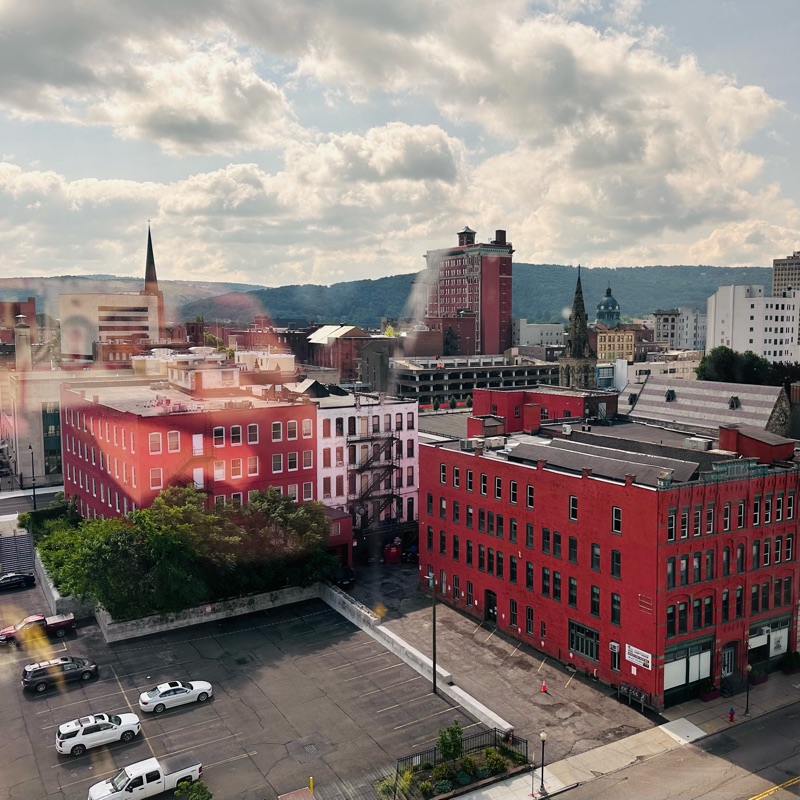
We went to San Francisco. It was really lovely. I saw some of Matt's colleagues who I really like, I saw some of a city I've always wanted to visit, and I got to hug and shop for books and eat pasta with Julie


Should I have travelled to the U.S.? At one point I had decided I would try not to. Then I went to Charlotte and Atlanta in May because I wanted to see Angus ("you don't boycott your kids" one of my friends said). Matt asked me to come with him to San Francisco, and I had to think about it. I think I have come to the decision that my son lives in the U.S. and my husband has to travel there often for work, unless he wants to quit in protest, which would probably be the most principled stand, and some people would take it. We are not that principled. At this point, for me to claim not going there as some kind of activism would be largely performative. 

In any case, it's hard to feel like going to San Francisco is showing any kind of support for this administration. There was evidence of activism everywhere. The bookstores all had zines and stickers and revolutionary literary material. I heard an ICE protest outside our hotel. A man at the SF MoMA asked where we were from and thanked us for coming. I was nervous going through customs, and then felt stupid when there are so many people who have far more call to feel scared. It's all so terrible. 

Anyway. I walked and walked and even though all my footwear was broken in (except the orthotics, I guess, I got those in December) my feet were torn to ribbons. Fortunately I had brought sandals (blistered my heels) and sneakers (blistered my instep) and boots, so each day a new site of injury would develop but the next day I would choose footwear that didn't hammer on the exact same site.


And I got to ride a cable car! With Julie! How beautifully surreal. I love it when a last-minute  plan that relies on an 8500-mile geographical switch comes together! 


The Books of San Francisco:

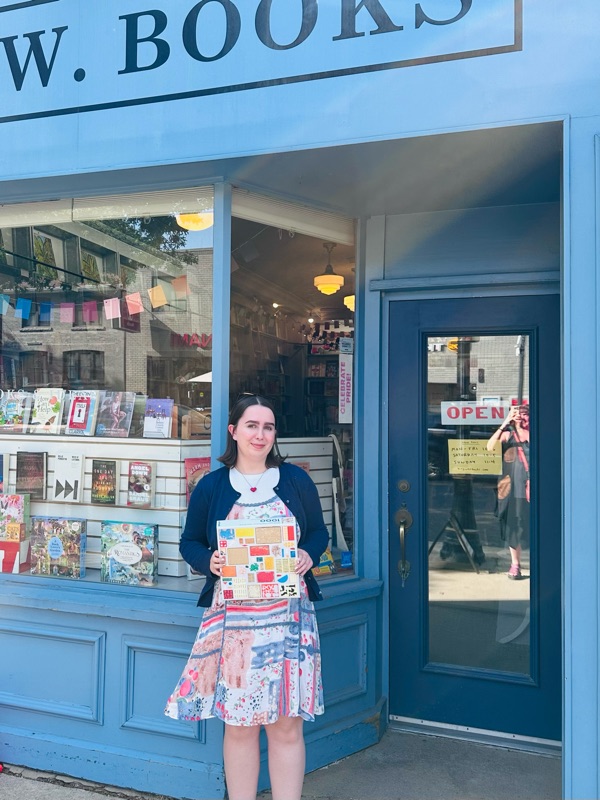
After a crazy first day of travel (more on that later) Matt went to his trade show and I walked around the area around our hotel. Fortuitously, there was a bookstore called The Best Bookstore just around the corner. I walked in and it was a nice bright space, and the books had fun sticky notes on them. I was a bit at a loss, because lord knows I want to support all the independent bookstores, but what do I do, just grab any random book? Just as I thought this, right at eye level, I saw Elder Race by Adrian Tchaikovsky, which Steph had just recommended, which seemed like a sign, so I bought it. 


Matt's colleague Camille took me to Golden Gate Park and a bunch of awesome lookout places one day, and we ended up having lunch right across the street from Green Apple Books, which Julie had mentioned. It had both used and new books, which is always really cool, and I found a used copy of March by Geraldine Brooks. It also had a shelf of books for the Prison Library Project - books that were requested by prisoners and approved - so I bought a copy of N.K. Jemisin's The Fifth Season to donate


Then I went to City Lights bookstore with Julie. I bought Either/Or by Elif Batuman because I had read The Idiot for book club and loved it, and because I always feel a bit like an idiot stumbling around in a new city. I had to buy a Mandylion Press copy of The Hill of Dreams by Arthur Machen because Mandylion "unearths lost literary gems written by women and weirdos in the (very) long nineteenth century". And then Julie told me there was a downstairs and downstairs I found and had to buy this gorgeous edition of Rosencrantz and Guildenstern Are Dead for obvious reasons. They also had an unutterably beautiful edition of Middlemarch, which I would have snapped up except Julie and I had some walking to do still and it was HEAVY.


AND if all of that wasn't cool enough,  I got a book from the Little Free Library at the Painted Ladies with Camille. Camille is a highly successful sales person for Matt's company who is a woman in tech, can hold her baby in one arm while furiously texting one-handed with the other, and also reads. Eve and I are in awe of her. 


There, now feel free to skip the horror books if they're not your thing!


Four-Star Horror

I know, I know, a lot of people think I am weirdly attracted to horror books and movies. Some people like romances, I happen to like some occasional dread and doom, who knows why? Bad horror is very bad, but then bad fiction can also be very bad. Good fiction brushes the heights and fathoms the profundity of human experience and emotion, and I think good horror does the same. I've always appreciated art that admits the possibility of strangeness. 


Horror Movie by Paul Tremblay: Synopsis from Goodreads: A chilling twist on the “cursed film” genre from the bestselling author of The Pallbearers Club and The Cabin at the End of the World.

In June 1993, a group of young guerilla filmmakers spent four weeks making Horror Movie, a notorious, disturbing, art-house horror flick.

The weird part? Only three of the film’s scenes were ever released to the public, but Horror Movie has nevertheless grown a rabid fanbase. Three decades later, Hollywood is pushing for a big budget reboot.

The man who played “The Thin Kid” is the only surviving cast member. He remembers all too well the secrets buried within the original screenplay, the bizarre events of the filming, and the dangerous crossed lines on set that resulted in tragedy. As memories flood back in, the boundaries between reality and film, past and present start to blur. But he’s going to help remake the film, even if it means navigating a world of cynical producers, egomaniacal directors, and surreal fan conventions—demons of the past be damned.

But at what cost?

-”It’s difficult to put into words. The difference between screen deaths as entertainment and art, perhaps. And sorry, that’s bullshit, too, as come on, Evil Dead 2 is one of my favorite movies. And people die violently in real life, so they must die violently in our art too.

‘So, no, I’m not filming that party scene and I’m not adding any other major scenes, because I want to make this movie. What I love about it, as written and as it will be filmed, is that I honestly don’t know what it means, that it makes me so uncomfortable but almost joyously so, and it communicates emotions I can’t simply describe with words alone.’”


-”EXT. KARSON’s HOUSE – CONTINUOUS

His house was always the last place he ever wanted to be, but there is no place else for him to go, which is one of the many horrors of this film.”


BUT AT WHAT COST? Reminded me a little of Night of the Mannequins by Stephen Graham Jones, although the pace lagged a little in places. Less frightening than odd, disquieting, and melancholy. I like hearing people talk about what it is about horror that draws them and moves them. 

There can be so many layers to a story involving a piece of art. There's the matter of interpretation, and how some fans can become positively unhinged at the thought that anyone else dares to disagree with their absolutely-the-only-true-and-rightful-exegesis. The way scarcity can create insatiable demand. All the ways lines can become blurred in art and life, and the question of 'are humans the real monsters' or 'wait, are monsters the real monsters'. I often find this writer a bit of a miss for me, but this was a better fit. 

A Sorceress Comes to Call by T. Kingfisher: Synopsis from Goodreads: A dark retelling of the Brothers Grimm's Goose Girl, rife with secrets, murder, and forbidden magic

Cordelia knows her mother is unusual. Their house doesn’t have any doors between rooms, and her mother doesn't allow Cordelia to have a single friend—unless you count Falada, her mother's beautiful white horse. The only time Cordelia feels truly free is on her daily rides with him. But more than simple eccentricity sets her mother apart. Other mothers don’t force their daughters to be silent and motionless for hours, sometimes days, on end. Other mothers aren’t sorcerers.


After a suspicious death in their small town, Cordelia’s mother insists they leave in the middle of the night, riding away on Falada’s sturdy back, leaving behind all Cordelia has ever known. They arrive at the remote country manor of a wealthy older man, the Squire, and his unwed sister, Hester. Cordelia’s mother intends to lure the Squire into marriage, and Cordelia knows this can only be bad news for the bumbling gentleman and his kind, intelligent sister.

Hester sees the way Cordelia shrinks away from her mother, how the young girl sits eerily still at dinner every night. Hester knows that to save her brother from bewitchment and to rescue the terrified Cordelia, she will have to face down a wicked witch of the worst kind.

-”’I…yes, I’d be happy to…’ Cordelia was growing annoyed with herself for stammering so often. I may not be clever or brave or beautiful, but is it too much to ask that I can form a complete sentence?” (Yes! Precisely! At least she's aware of it)

-”A week ago, Cordelia would have wondered if the Squire lacked the money to fix it. With seven days of hard-won wisdom, she had realized that the Squire was so wealthy that he simply did not need to care. No one was going to look at Chatham House and think that the inhabitants were poor, so why bother rehanging perfectly good wallpaper because of a minor imperfection?

It was a strange reflection that, like Hester turning the cuffs on her gowns, you were somehow allowed to be poorer if you were rich than if you were actually poor.”

When I was little, we had a recording of The Goose Girl on... a little record player, I think? I have double-checked that Falada in the original fairy tale was the princess's loyal companion, which is what I remember, along with realizing after many listenings, to my great horror, that the goose girl was stealing away to talk to her horse's HEAD which had been removed from the horse and mounted on a gate. 

I have to say that with that memory in play, it's hard to imagine a retelling of the story matching that level of horror. Cordelia's mother, and imagining what it would be like to be tied to her, gives it a pretty good run though. I admit that I found Cordelia annoying - so twitchy! so meek! - and I was aware that this was unfair, given her life to that point. Hester, on the other hand - major badass, major delightful use of her status as an invisible spinster to plan to bring down the witch. I'm pretty sure the horse didn't talk in this one, but maybe double check with Engie. 

I Was a Teenage Slasher by Stephen Graham Jones: Synopsis from Goodreads: It’s the summer before senior year for best friends Tolly Driver and Amber Dennison. They’re not in the marching band, they’re not in the FFA – they don’t really count. Amber’s the only Native student in town, and Tolly’s only on the radar due to his father’s recent death.

This is all about to change.

Bodies are going to be dropping fast in this small West Texas town. For a few unbearably hot days that will resonate through the decades and even get made into a TV movie, Tolly and Amber will be famous. Notorious even. Finally, everyone will know their names.

This is Stephen Graham Jones x-raying the slasher genre, interrogating its motivations over the shoulder and in the voice of the killer itself – from a town he did some growing up in, in a year he was also seventeen.

The kills will be poignant, the jokes will hurt, and the violence will be endearing. Everything’s turned around for Tolly, for Amber – for all of Lamesa, Texas.

-”After, when everyone was shrugging their way back through the headstones to their trucks, this could also be where all this starts?

It’s like, when historians are trying to go back and say what started World War I? There’s the trigger, I guess you could call it – that archduke getting got – but there’s a lot of precipitating little things as well.

This is one of those little things. And it’s why I associate Justin Joss with my dad’s funeral.”


-”West Texas, man. I both do and don’t miss it, I guess.

It’s not an easy place to try and hack a living out, but I think your heart only ever knows a single place, too.

You’re my place, Lamesa.

I’m so sorry.”


No one like Stephen Graham Jones to engage your sympathy for the villain. Sort of a more melancholy Scream in book form - sometimes you become imprisoned as an archetype whether you want to or not. You become the victim of a horrible bullying prank enacted by a few assholes who should be dipped in honey and left out for the ants, and the next thing you know you pull a knife out of its holder to cut a sandwich and it makes an unmistakable *shing* sound, and it's all downhill from there.

This is, in a lot of ways, a bittersweet coming-of-age story, set in the same Texas town the author grew up in. The same important friendships, the same woes and terrors, the same regrets. With a few more murders than usual. Like much of SGJ's work, it is haunting in every sense of the word. 

The Southern Book Club's Guide to Slaying Vampires by Grady Hendrix: Synopsis from Goodreads: Fried Green Tomatoes and Steel Magnolias meet Dracula in this Southern-flavored supernatural thriller set in the '90s about a women's book club that must protect its suburban community from a mysterious and handsome stranger who turns out to be a blood-sucking fiend.

Patricia Campbell had always planned for a big life, but after giving up her career as a nurse to marry an ambitious doctor and become a mother, Patricia's life has never felt smaller. The days are long, her kids are ungrateful, her husband is distant, and her to-do list is never really done. The one thing she has to look forward to is her book club, a group of Charleston mothers united only by their love for true-crime and suspenseful fiction. In these meetings, they're more likely to discuss the FBI's recent siege of Waco as much as the ups and downs of marriage and motherhood.

But when an artistic and sensitive stranger moves into the neighborhood, the book club's meetings turn into speculation about the newcomer. Patricia is initially attracted to him, but when some local children go missing, she starts to suspect the newcomer is involved. She begins her own investigation, assuming that he's a Jeffrey Dahmer or Ted Bundy. What she uncovers is far more terrifying, and soon she--and her book club--are the only people standing between the monster they've invited into their homes and their unsuspecting community.

-”’These two women were best friends and they chopped each other up with axes,’ Kitty said. ‘Don’t pretend you don’t want to know what happened.’

‘Jude is obscure for a reason,’ Maryellen growled.”


‘You all need to get alarms,’ Maryellen said. ‘Ours connects directly to the police, and the Mt. Pleasant police department has a three-minute response time.’

‘I think you could still get stabbed forty-one times in three minutes,’ Kitty said.

‘I won’t have those ugly stickers all over my windows,’ Grace said.

‘You’d rather get stabbed forty-one times than ruin the curb appeal of your home?’ Maryellen asked.

‘Yes,’ Grace said.”

This book kind of wrecked me. I had read two previous books by the author, and enjoyed them. I had in my head that he was a kind of horror/comedy writer, but I think I've only read the books that veered more towards horror. So I'm not sure why I was expecting this to be funnier. I don't even really LIKE horror comedy that much, for the most part. No worries, though. 

I felt kind of naive, and maybe unaware of my privilege, at how indignant and surprised I was at the husband/wife dynamic in most of these couples. It seemed like something more appropriate for a book that takes place in the fifties or seventies. I don't know if it's because it's set in the Southern United States or because I've just been that clueless. Actually, a lot of the reading I've been doing lately does point to the latter being true. 

So I guess in my head it would go something like: Southern ladies are in a book club, drink wine and gossip more than they discuss the book (no judgement, truly), somehow it becomes apparent that there is a vampire in town, and they posse up and stake the bastard while he thrashes humorously like Paul Reubens in Buffy the Vampire Slayer

That was NOT how it went. The book club is a microcosm of the social hierarchy and constraints of the neighbourhood. The vampire is more like a sexy, well-spoken, charismatic men's rights activist or similar, someone your husband would get drawn in by and then refuse to see his true agenda. And then you'd have to decide if you are willing to risk your kids being taken away and being left penniless and ostracized.

Holy shit, you guys. Is this book about capitalism?

It was much darker than I was expecting, and much deeper. 

The Library of the Dead (Edinburgh Nights #1) by T.L. Huchu: Synopsis from Goodreads: 

When a child goes missing in Edinburgh's darkest streets, young Ropa investigates. She'll need to call on Zimbabwean magic as well as her Scottish pragmatism to hunt down clues. But as shadows lengthen, will the hunter become the hunted?

When ghosts talk, she will listen...


Ropa dropped out of school to become a ghostalker. Now she speaks to Edinburgh's dead, carrying messages to the living. A girl's gotta earn a living, and it seems harmless enough. Until, that is, the dead whisper that someone's bewitching children--leaving them husks, empty of joy and life. It's on Ropa's patch, so she feels honor-bound to investigate. But what she learns will change her world.

She'll dice with death (not part of her life plan...), discovering an occult library and a taste for hidden magic. She'll also experience dark times. For Edinburgh hides a wealth of secrets, and Ropa's gonna hunt them all down.

-”The veiled implication that my little sister might end up just like me if I don’t do something grates on me. Blunt truths don’t cut cleanly, I guess.”

-”Something smells off in the barns. Even in this city of olfactory tragedy, this scent’s more pungent and desperate than anything I’ve encountered before.”


Very well written, with a visceral sense of place ("olfactory tragedy" - *chef's kiss*) and a well-organized and fascinating magic system. The dialogue/dialect is pitched perfectly, the sense of desperation and determination is palpable, and Ropa is a fantastic character. Looking forward to reading the next one.

The Madness by Dawn Kurtagich: Synopsis from Goodreads: With one unexpected email from her estranged best friend, Lucy, Mina Murray’s carefully curated life is turned upside down. Leaving behind her psychiatric practice in London, along with her routine and the calm it brings, she returns to the windswept shores of Wales. Faced with everything she’s left behind, she soon discovers that Lucy’s symptoms mirror those of her mysterious patient with amnesia hundreds of miles away.

With nothing but an untreatable sickness connecting the two women, and with Lucy’s life on the line, Mina finds herself asking questions and being drawn ever-deeper into a web of secrets, missing girls, and the powerful, nameless force at its center—one that has been haunting her for years.

As terrible, ancient truths begin to reveal themselves, Mina prepares to confront her own darkest secrets, and with them, an evil beyond comprehension. Together with a group of smart, savvy women, Mina seizes one last, desperate chance to stop the cycle that began so long ago. But there are dangers to inviting the attentions of what might not be a man, but a monster…


-”I forgot what night tastes like, the salty, moon-licked rot of London after dark.” (fucking gorgeous sentence)

The last book I read by this author was a bit of a miss, but this modern, feminist, Welsh take on Dracula lured me in, and worked much better for me. Recentering the victimized women and Mina's processing of her past trauma was so satisfying, and the narrative was also just energetic and engaging. The Welsh folklore blended seamlessly as well. I am newly up for anything by this author.

Guests by Kealan Patrick Burke: Synopsis from Goodreads:  tour bus full of elderly visitors in search of a new life—even if it isn’t their own. 

A fancy hotel in the off-season, a snowy night, an unexpected bus full of guests, and a grieving bartender on his last shift - obviously these are the ingredients for a killer horror novella. Cemetery Dance Publishing occasionally put out small collections of work by their favourite authors. I've discovered some of the most imaginative and awe-inspiring work by checking these out. Occasionally it is so well done that I wish I hadn't read it - I called Kaaron Warren a major sicko on Twitter once, which she took as a high compliment. 

A Conventional Boy (The Laundry Files #13, New Management #4) by Charles Stross: Synopsis from Goodreads: In 1984, Derek Reilly was just another spotty teenage dungeon master growing up in middle England. But then a secret government agency tasked with suppressing magical intrusions received a tip-off – and one midnight raid later, his life was turned upside down by the Satanic D&D Panic.

Decades later Derek, now middle-aged and institutionalized, is a long-term inmate at Camp Sunshine, a center for deprogramming captured Elder God cultists. He’s considered safe enough to edit the camp newsletter, and he even has postal privileges – which he uses to run a play-by-mail game. After 25 years, Derek finally has reason to escape: a nearby D&D convention. While Derek’s D&D games were full of fictional elder gods and world-ending threats, a LARP game at the con is a dread ritual designed to summon a great evil into our world, and it’s up to Derek and his players to stop them.

The fate of the world may depend on the contents of Derek’s magic dice bag.

-”Here is what it is like to awaken one morning, and discover that in your sleep, instead of being transformed into a monstrous verminous bug, you have been mistakenly detained in a camp for dangerous cultists.


It sucks.


-”Derek did his best to pay her breasts exactly as much attention as they deserved, which was to say no more than any other magic weapon of +1 bamboozlement.”


I sort of knew I was coming in to a series in the middle - I don't think it really mattered. This was kind of wholesome and fun, except for the plentiful death and dismemberment. Derek is a great character, easy to root for - the Fool, the Invincible Incompetent. I enjoyed the incredulous chaos left in his wake, and his innocent shlumpiness. Nothing was really unpredictable, but the journey was very enjoyable.

Beauty in the Blood by Charlotte Carter: Synopsis from Goodreads: A riveting, eerie novel about two families caught up in a centuries-old curse.

Sarah Toomey is afraid she's losing her mind. Ever since her mother’s death, she's found herself acting upon strange urges, losing track of time, and coming to in odd places. There’s a dark force that seems to be haunting her, and leaving death in its wake. Yvonne Howard has reinvented herself. After years of unhappiness as a guard in a women’s prison she’s finally pursuing her passion for cooking. But when an ex-inmate reaches out and asks her to investigate the inmate’s brother’s death, then ends up killed herself, Yvonne is pulled into the same dangerous world Sarah is inhabiting—a world of chaos, death, and a curse that dates back to the Civil War.


Innovative and very sad. I admit I'm a little foggy on why the curse was laid by a black woman because of the murder of her children and yet it is a black woman that ends up cursed - should it not be a white person? Is it just an echo of the fact that nothing about slavery and racism is or has ever been fair? The characters are the kind where I sometimes stop to wonder why the author goes to all the trouble to craft such funny, warm, endearing personalities just to doubly twist the knife into the reader's heart with what's coming to them (the author is God, God is such a sick son of a bitch sometimes). There is that sense of slow, creeping inevitability and foreboding that the best work of this kind has. The description of Yvonne's history as a prison guard - how she thought she would be kind and compassionate and then was overcome by the brutality and horror of the job - was viscerally effective. This was a frightening evocation of the reverberations of slavery and inequality and the loss and anger that rolls down generations.

I'll be Waiting by Kelley Armstrong: Synopsis from Goodreads: From New York Times Bestselling author Kelley Armstrong comes a spellbinding new tale of supernatural horror involving a haunted-house, seances, lost loved ones, and a sinister spirit out for blood...

Nicola Laughton never expected to see adulthood, being diagnosed with Cystic Fibrosis as a child. Then medical advances let her live into her thirties and she met Anton, who taught her to dream of a future… together. Months after they married, Anton died in a horrible car, but lived long enough to utter five words to her, “I’ll be waiting for you.”

That final private moment became public when someone from the crash scene took it to the press—the terminally ill woman holding her dying husband as he promised to wait for her on the other side. Worse, that person claimed it wasn’t Anton who said the words but his ghost, hovering over his body.

Since their story went public, Nicola has been hounded by spiritualists promising closure. In the hopes of stopping her downward spiral, friends and family find a reputable medium—a professor of parapsychology. For the séance, they rent the Lake Erie beach house that Anton’s family once owned.

The medium barely has time to begin his work before things start happening. Locked doors mysteriously open. Clouds of insects engulf the house. Nicola hears footsteps and voices and the creak of an old dumbwaiter…in an empty shaft. Throughout it all she’s haunted by nightmares of her past. Because, unbeknownst to the others, this isn’t her first time contacting the dead. And Nicola isn’t her real name.

Three and a half. This was much better than the other Kelley Armstrong horror I read this year. It struck a good balance in the protagonist's voice between a healthy, snarky skepticism and a tentative belief. Good characters and relationships.


The Queen by Nick Cutter: Synopsis from Goodreads: One sunny morning in June, Margaret Carpenter wakes up to find a new iPhone on her doorstep. She switches it on and is greeted by a text from her best friend, Charity Atwater. The problem is, Charity’s been missing for over a month. Most people in town – even the police – think she’s dead.

Margaret and Charity have been lifelong friends. They share everything, know the most intimate details about each other . . . except for the destructive secret hidden from them both. A secret that will trigger a chain of events ending in tragedy, bloodshed, and death. And now Charity wants Margaret to know her story – the real story.

In a narrative that takes place over one feverish day, Margaret follows a series of increasingly disquieting breadcrumbs as she forges deeper into the mystery of her best friend – a person she never truly knew at all. . . .

3.5 rounded up. I didn't love that the prologue and early scenes basically gave most of the story away and then the rest was just illustration. I would have preferred a more gradual reveal, but that's more a personal preference. The story itself was pretty solid, and the body horror was well done and relevant to the plot. It was fun to have a Canadian setting.

Old Soul by Susan Barker: Synopsis from Goodreads: In Osaka, two strangers, Jake and Mariko, miss a flight, and over dinner, discover they’ve both brutally lost loved ones whose paths crossed with the same beguiling woman no one has seen since.

Following traces this mysterious person left behind, Jake travels from country to country gathering chilling testimonies from others who encountered her across the decades—a trail of shattered souls that eventually leads him to Theo, a dying sculptor in rural New Mexico, who knows the woman better than anyone—and might just hold the key to who, or what, she is.

Part horror, part western, part thriller, Old Soul is a fearlessly bold and genre-defying tale about predation, morality and free will, and one man’s quest to bring a centuries-long chain of human devastation to an end.

This read as really original, refreshingly so. I understand some of the criticisms although the issues didn't frustrate me the same way. There was repetition, but I liked seeing the different people in the different geographical and cultural settings in every iteration. The mythological underpinning was unique and unsettling, and I liked the interleaving of the present-day situation and its suspense with the chapters where the ending was a foregone conclusion - it created a good rhythm. I would have preferred a different ending, but that's very much a personal preference. Will be looking for more from this author.

A Haunting on the Hill by Elizabeth Hand: Synopsis from Goodreads: From three-time Shirley Jackson, World Fantasy, and Nebula Award-winning author Elizabeth Hand comes the first-ever authorized novel to return to the world of Shirley Jackson's  The Haunting of Hill House:  a suspenseful, contemporary, and terrifying story of longing and isolation all its own.

Holly Sherwin has been a struggling playwright for years, but now, after receiving a grant to develop her play, The Witch of Edmonton, she may finally be close to her big break. All she needs is time and space to bring her vision to life. When she stumbles across Hill House on a weekend getaway upstate, she is immediately taken in by the ornate, if crumbling, gothic mansion, nearly hidden outside a remote village. It’s enormous, old, and ever-so eerie—the perfect place to develop and rehearse her play.
 
Despite her own hesitations, Holly’s girlfriend, Nisa, agrees to join Holly in renting the house out for a month, and soon a troupe of actors, each with ghosts of their own, arrive. Yet as they settle in, the house’s peculiarities are made known: strange creatures stalk the grounds,  disturbing sounds echo throughout the halls, and time itself seems to shift.  All too soon, Holly and her friends find themselves at odds not just with one another, but with the house itself. It seems something has been waiting in Hill House all these years, and it no longer intends to walk alone.

I did not have the same trepidation about an homage to The Haunting of Hill House that some readers did, because I have always liked the idea of the classic more than the actuality of it. I should give it another reread, because I find as I get older books hit quite differently. I felt like this captured the spirit of the original while being a little more accessible to modern readers (or maybe just me?). 


The house as a setting was obviously perfect - in its actuality and in the way it is perceived by each character. The characters, with their flaws and insecurities, and the play about the witch, all feed into a suffocating, explosive atmosphere that keeps everything on edge until the end. 

Universal Harvester by John Darnielle: Synopsis from Goodreads: Life in a small town takes a dark turn when mysterious footage begins appearing on VHS cassettes at the local Video Hut

Jeremy works at the counter of Video Hut in Nevada, Iowa. It’s a small town—the first “a” in the name is pronounced ay—smack in the center of the state. This is the late 1990s, pre-DVD, and the Hollywood Video in Ames poses an existential threat to Video Hut. But there are regular customers, a predictable rush in the late afternoon. It’s good enough for Jeremy: It’s a job; it’s quiet and regular; he gets to watch movies; he likes the owner, Sarah Jane; it gets him out of the house, where he and his dad try to avoid missing Mom, who died six years ago in a car wreck.

But when Stephanie Parsons, a local schoolteacher, comes in to return her copy of Targets, starring Boris Karloff—an old movie, one Jeremy himself had ordered for the store—she has an odd complaint: “There’s something on it,” she says, but doesn’t elaborate. Two days later, Lindsey Redinius brings back She’s All That, a new release, and complains that there’s something wrong with it: “There’s another movie on this tape.”

So Jeremy takes a look. And indeed, in the middle of the movie the screen blinks dark for a moment and She’s All That is replaced by a black-and-white scene, shot in a barn, with only the faint sounds of someone breathing. Four minutes later, She’s All That is back. But there is something profoundly disturbing about that scene; Jeremy’s compelled to watch it three or four times. The scenes recorded onto Targets are similar, undoubtedly created by the same hand. Creepy. And the barn looks a lot like a barn just outside of town.

Jeremy doesn’t want to be curious. In truth, it freaks him out, deeply. This has gone far enough, maybe too far already. But Stephanie is pushing, and once Sarah Jane takes a look and becomes obsessed, there’s no more ignoring the disturbing scenes on the videos. And all of a sudden, what had once been the placid, regular old Iowa fields and farmhouses now feels haunted and threatening, imbued with loss and instability and profound foreboding. For Jeremy, and all those around him, life will never be the same . . .

-”’Well, all right,’ said Steve, and then: ‘I think your mom would be proud, too.’

It always sat a little funny with Jeremy: Dad speaking on Mom’s behalf in her absence. These past few years of sitting around waiting for something to solidify: wouldn’t Mom have also understood that? You wait for signs, but there aren’t any signs; you wait a while longer, just in case.”


-”In open spaces people begin to think about the world of possibilities, about things that might happen that they couldn’t have foreseen: possibly our daughter will grow up to be president, possibly swords will be beaten into plowshares, possibly we will all climb into spaceships and go live on the moon. The substance of things hoped for, an endless open field. But there’s another region in that realm, and it’s actually the biggest spot on the map: that place in which none of this will happen at all, and everything instead will remain exactly as it is – quiet,  unremarkable, well ordered and well lit, just exactly enough of everything for the people within its boundaries. A little drab from the outside, maybe: slow, or plain. But who, outside, will ever see it, or learn the subtleties of its textures, the specific tensions of its warp and weft? You have to get inside to see anything worth seeing, you have to listen long enough to hear the music. Or possibly that’s a thing you just tell yourself when it becomes clear you won’t be leaving. Sometimes that seems more likely. It’s hard to say for sure.”


Do NOT pick up anything of this author's if you're looking for straightforward, in-your-face horror. I would likely have found everything by him very frustrating when I was younger (like I said, should read Hill House again). The first review on Goodreads says "there is a version of this story where it actually gets told. But this isn't it." And it's not wrong! There is a version of this book (and of Wolf in White Van, the first Darnielle I read) that causes me to fling my iPad across the room in disgust. There are layers of strangeness and sadness here - the mother who leaves, the mother who dies, the families left behind, the notion of the cursed film, the melancholy of small towns, the grief inherent in seeing your children grow away from you - and in between all of those layers I could feel a lurking horror that never quite came into view. I generally hate books that have a thing that never quite comes into view! But here I did not. It's a mystery. 

Something in the Walls by Daisy Pearce: Synopsis from Goodreads: Newly minted child psychologist Mina has little experience. In a field where the first people called are experts, she’s been unable to get her feet wet. Instead she aimlessly spends her days stuck in the stifling heat wave sweeping across Britain and anxiously contemplates her upcoming marriage to careful, precise researcher Oscar. The only reprieve from her small, close world is attending the local bereavement group to mourn her brother’s death from years ago.

Then she meets journalist Sam Hunter at the grief group one day, and he has a proposition for her: Thirteen-year-old Alice Webber claims a witch is haunting her. Living with her family in the remote village of Banathel, Alice finds her symptoms are getting increasingly disturbing. Taking this job will give Mina some experience and much-needed money; Sam will get the scoop of a lifetime; and Alice will get better—Mina is sure of it.

But instead of improving, Alice’s behavior becomes inexplicable and intense. The town of Banathel has a deep history of superstition and witchcraft. They believe there is evil in the world. They believe there are ways of…dealing with it. And they don’t expect outsiders to understand.

-”There is a glass half-visible in the foreground of one photo, slightly blurred. It’s a cloudy pink liquid with chunks of pineapple floating on the surface. What had he put in them, these ****inis? Rohypnol? Ether? Laudanum? That seemed like ****’s style. Something old-fashioned and melancholy, like a sober Victorian ghost.

A nice, tense combination of folk horror with the horror that is being a misunderstood teenage girl and the angry horror of chronic poverty, which can lead to communities pulling together but just as often leads to othering and scapegoating. 

Lucky Day by Chuck Tingle:Synopsis from Goodreads: Lucky Day is the newest novel of terror from Chuck Tingle, USA Today bestselling author of Bury Your Gays, where one woman must go up against the most horrifying concept of all: nothing.

Vera is a survivor of a global catastrophe known as the Low Probability Event, but she definitely isn't thriving. Once a passionate professor of statistics, she no longer finds meaning in anything at all.

But when problematic government agent Layne knocks on her door, she's the only one who can help him uncover the connection between deadly spates of absurdity and an improbably lucky casino. What's happening in Vegas isn't staying there, and the world is at risk of another disaster.


When it comes to Chuck Tingle, the only thing more terrifying than a serious horror novel is an absurd one...

I liked the contents of this book almost as much as I hate the cover. I think it falls between Bury Your Gays (favourite) and Camp Damascus (still pretty good). It opens with a bonkers Final Destination-esque Rube Goldberg scene of death and destruction, where eight million people die in a single day. If you are like me and know zero about statistics or how many people die in a typical day on earth, it is between 150 000 and 175 000, you're welcome.

Our protagonist then sinks into a slough of despond and self-loathing, with one particularly upsetting detail (no spoilers, but Engie, give this one a miss). Until the problematic government agent knocks on her door.

I really like Tingle's (wow, that's hard to type with a straight face) writing style - hard-boiled with a sweet/bitter center, glib but not really, pitiless with a smidge of hope. 


Books Read in 2025: Four-Star Children's, YA, Graphic, and Short Stories. And WTF 15E?

 So Suzanne made me cry a little with her comment on yesterday's post (now two days ago, hoping it won't turn into three) (update: ...